Key Takeaways
- Do not assume every large or leaning tree needs removal. Some trees can be managed with targeted pruning.
- Dead limbs, trunk cracks, root movement, fresh leaning, cavities, and hanging branches all justify a closer inspection.
- Storm-damaged trees near buildings, driveways, fences, roads, or utility lines should not be treated as do-it-yourself projects.
- Wooded lots, slopes, narrow lanes, septic areas, and farm structures can affect how tree work is planned in Castleton.
- Tree removal, pruning, stump grinding, emergency cleanup, shrub work, and land clearing can all be part of a practical property-care plan.
For Castleton properties, the safest next step is a professional site evaluation before anyone climbs, cuts, or operates equipment near a questionable tree. Premier Tree & Landscaping provides local help for homeowners and landowners dealing with leaning trees, broken limbs, storm damage, crowded canopies, stumps, and overgrown areas that need a clear plan. In Castleton, a tree can be valuable shade one season and a serious concern after heavy rain, wind, ice, or snow. Mature hardwoods often stand close to homes, barns, fences, gravel drives, sheds, and pasture gates. The right response depends on the tree’s condition, the ground around its roots, its location, and what could be damaged if a limb or trunk fails.
Why Storm Tree Risk Feels Different in Castleton
Castleton sits among the wooded, rural landscapes of Rappahannock County, where trees often define a property’s character and function. They can frame a long driveway, provide shade for a home or livestock area, mark a boundary, or grow beside an old fence line. Those same trees may also overhang places that must stay accessible, including garages, barns, gates, private roads, and emergency routes.
Storm risk is rarely about a single issue. Wind can put pressure on a weakened branch union. Saturated soil can reduce the support available to a root system. Ice can add substantial weight to limbs that already have decay or poor structure. A seemingly minor defect can become more important when the tree stands uphill from a house, above a driveway, or beside a fence that is difficult to replace. When storm damage affects a roof, vehicle, outbuilding, or other covered structure, safely documenting the situation may also be important. Homeowners facing tree damage insurance claims in Virginia should photograph visible damage from a safe distance, save estimates and invoices, and review the details of their own policy before assuming what is covered.
Location: Premier Tree & Landscaping | 6732 Campground Ln, Castleton, VA 22716 | (540) 274-8510 | https://premiertreelandscaping.com/
How to Recognize a Tree That Needs Attention
A tree does not have to be completely dead to deserve an evaluation. In fact, some of the most concerning defects are hidden by a full canopy of green leaves. A tree can look healthy from a distance while decay, root problems, or structural weaknesses develop closer to the trunk or inside a major branch union. Property owners should watch for visible changes after a storm and during routine walks around the property. The tree-risk guidance on common signs of structural weakness and storm damage supports a careful approach rather than waiting for failure.
Signs That Merit a Professional Assessment
- Dead, broken, or hanging limbs over a driveway, roof, deck, fence, or path.
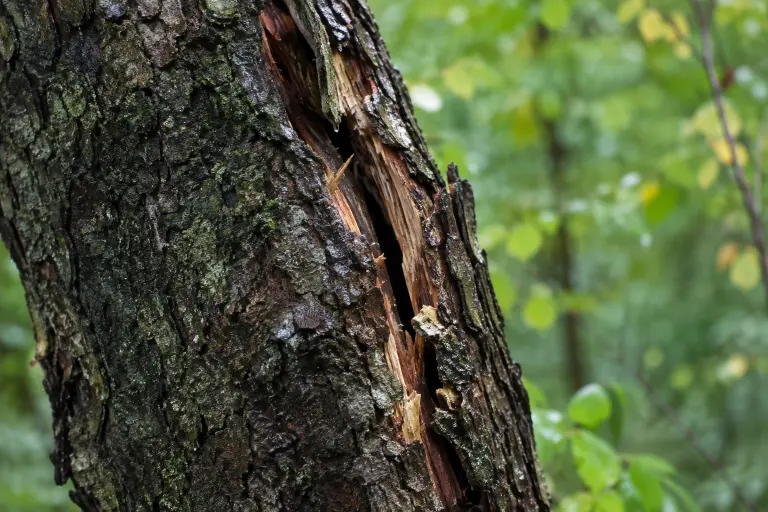
- New cracks in the trunk or in a large branch where it joins the tree.
- A split stem, especially on a tree with multiple trunks growing from the same base.
- Freshly raised soil, exposed roots, or root-zone movement after rain or wind.
- A noticeable new lean or a tree that appears to have shifted toward a structure.
- Cavities, soft wood, fungal growth, or peeling bark associated with an injured area.
- Branches rubbing against siding, roofing, chimneys, gutters, or outbuildings.
- Damage following trenching, grading, compaction, erosion, or construction near the tree.
Not every sign has the same meaning. A small dead limb in an otherwise sound tree may be a pruning concern. A large crack, unstable root plate, or trunk decay near a home may require a more urgent decision. That distinction is why a site-specific assessment is more useful than judging a tree by height alone.
When Pruning May Be Better Than Removal
Removing a tree is sometimes necessary, but it should not be treated as the automatic solution. A sound tree with one defective limb, low branches over a driveway, or a crowded crown may benefit from carefully planned pruning. Proper pruning can remove deadwood, improve clearance, reduce interference with structures, and address selected defects without sacrificing the entire tree. On the other hand, removal may be the reasonable choice when the tree has major trunk damage, extensive decay, a severe lean toward a target, unstable roots, or storm damage that cannot be managed safely. On a Castleton property, the decision also depends on where the tree can be dismantled, how equipment can enter, and whether a fence, septic area, barn, garden, or slope needs protection.
Common property conditions and their possible service approaches include the following:
- Dead limb over a driveway: Targeted deadwood removal or pruning
- Branches against a roof: Clearance pruning
- Storm-split tree blocking access: Emergency removal and debris cleanup
- Leaning tree with lifting soil: Urgent on-site hazard evaluation
- Old stump limiting mowing or planting: Stump grinding
Tree Services That Support Safer Castleton Properties
A complete tree-care plan may include more than taking down a single tree. Premier Tree & Landscaping offers tree removal, tree trimming and pruning, emergency storm cleanup, stump grinding, shrub trimming and removal, and land clearing for Castleton-area properties. That range is especially useful where a project involves both an immediate hazard and longer-term property improvements.
Tree Removal and Controlled Dismantling
Large trees near structures cannot always be felled in one piece. On sloped or enclosed lots, a crew may need to remove the tree in controlled sections so material can be lowered or directed away from buildings, fencing, landscaping, and access routes. Planning matters when the work area includes narrow drives, gates, uneven terrain, or limited room for equipment.
Tree Trimming and Structural Pruning
Pruning can be useful for removing dead limbs, addressing clearance problems, and managing branches that interfere with a roof or driveway. It can also help a homeowner maintain a more usable view, protect access to buildings, and reduce the chance that weak deadwood will fall in ordinary weather.
Stump Grinding and Land Clearing
After a removal, a stump can remain an obstacle for mowing, walking, fencing, planting, or future construction. Stump grinding can help reclaim that space. Land clearing can also help owners open a fence line, prepare a building area, manage brush, or restore an overgrown section of a rural property.
What to Do After a Storm Damages a Tree
After wind, snow, ice, or heavy rain, the priority is keeping people away from the hazard. A suspended limb can shift without warning, and a split trunk may be under tension. Avoid parking or walking beneath damaged limbs, and do not try to pull down a branch with a rope, tractor, vehicle, or ladder.
- Keep family members, pets, visitors, and vehicles away from the damaged area.
- Take photographs from a safe location if documentation may be needed.
- Do not climb the tree or use a chainsaw on a suspended, split, or tensioned limb.
- Move portable items, such as outdoor furniture or equipment, only if they can be reached safely.
- Request a professional evaluation for the tree, nearby structures, access route, and cleanup needs.
If a tree, limb, or equipment is touching an overhead power line, stay clear and contact the utility company immediately. Work near energized lines has specialized safety requirements, and line-clearance tree trimming operations should be handled through the appropriate qualified utility or line-clearance process. Do not touch the tree, nearby fence, vehicle, or anything else that could be energized.
What Happens During a Premier Tree & Landscaping Request?
A productive request begins with clear information. Tell the company whether the issue involves a tree on a structure, a blocked driveway, a hanging limb, a visible lean, a stump, brush, or a planned clearing project. Mention any urgent access concerns, including a shared lane, a farm entrance, an emergency route, or an area used by livestock.
During an on-site evaluation, the work can be considered in context. The tree’s condition, height, branch structure, nearby targets, slope, equipment access, debris handling, and stump needs all affect the recommended scope. This approach gives the homeowner a clearer explanation of whether pruning, removal, emergency cleanup, grinding, or a combination of services is appropriate for the situation. Before the crew arrives, move vehicles, trailers, lawn equipment, and outdoor furniture from the work zone when it is safe to do so. Unlock gates, identify wells and septic areas, point out underground features or fragile fencing, and decide whether any usable wood should remain on the property. Children and pets should remain away from the active work area.
Why Local Planning Matters for Castleton Tree Work
Rural property conditions can substantially change the work plan. A tree beside a flat suburban curb is different from a compromised oak above a gravel lane, a poplar near a barn, or a leaning hardwood at the edge of a wooded slope. Access, terrain, targets, and cleanup all deserve attention before cutting begins. For homeowners in Castleton and nearby Rappahannock County communities, preventive attention can often reduce surprises. A seasonal walk around the property after major weather, before a planned construction project, or before listing a home can reveal deadwood, clearance issues, failing limbs, and trees that should be evaluated before they become an emergency.
Request Tree Help in Castleton, Virginia
If a tree is leaning, split, decaying, storm-damaged, blocking access, or growing too close to a structure, describe the issue as clearly as possible when requesting service. Include the tree’s location, urgency, nearby buildings or utilities, access limitations, and whether debris removal or stump grinding is needed. A professional on-site evaluation can help turn a concerning situation into a defined, safer plan.
Conclusion
Castleton property owners should take a proactive approach to tree care, especially when mature trees grow near homes, barns, fences, driveways, and other important structures. Recognizing warning signs such as dead limbs, trunk cracks, root movement, and sudden leaning can help identify potential hazards before they cause further damage. However, removal is not always necessary, as targeted pruning may address certain problems while preserving a healthy tree. Premier Tree & Landscaping offers tree removal, pruning, emergency storm cleanup, stump grinding, shrub services, and land clearing to help property owners address a range of outdoor maintenance needs. Because terrain, equipment access, nearby structures, and underground features can affect the work, a professional site evaluation is an important first step. With careful planning and timely attention, homeowners and landowners can better manage tree-related risks, maintain usable outdoor spaces, and protect their properties throughout the changing seasons.
Also Read