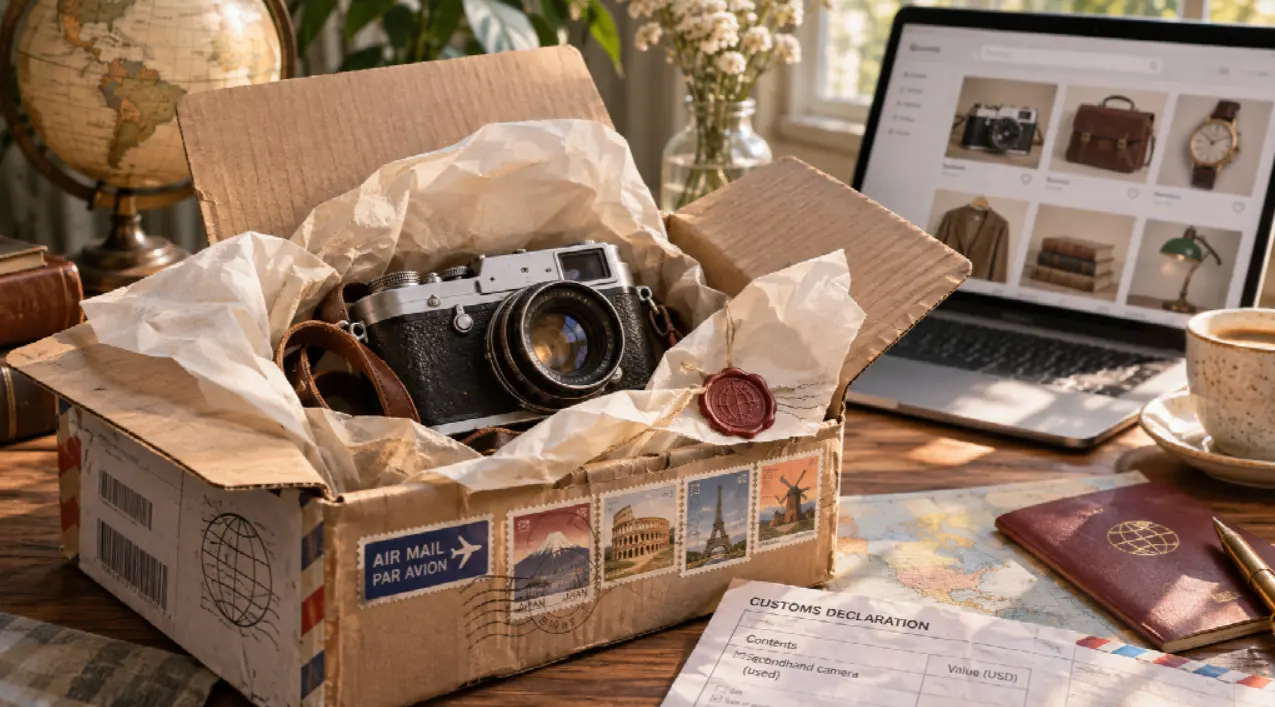
Somewhere in Tokyo, someone is selling a film camera that hasn’t been manufactured in years. In Paris, a jacket from an old designer collection is waiting for a new owner. And in Germany, a record collector might finally be parting with an album you’ve spent months trying to find. Not long ago, discovering these items would have required a trip abroad, a lucky encounter in a vintage shop, or knowing the right people. Today, they can appear in your search results while you’re sitting at home in your pajamas. That’s what makes international secondhand shopping so addictive. You’re not browsing shelves filled with identical products. You’re exploring a worldwide collection of things that already have a history, and you never quite know what you’ll find next.
Why the Best Secondhand Finds Might Be Overseas
One of the most interesting things about secondhand shopping is how differently people value the same objects. A particular camera might be relatively common in Japan but difficult to find in Europe. A handbag from a discontinued collection could be sitting unnoticed in someone’s wardrobe while collectors elsewhere are searching desperately for it. Even ordinary products can become surprisingly desirable when they weren’t originally sold in certain countries. International marketplaces bring these separate markets together, giving buyers access to things they would probably never discover locally. And it’s not always about getting the lowest price. In eBay’s 2026 Recommerce Report, shoppers actually rated access to unique items slightly higher than better prices as a benefit of buying internationally. That makes sense when you consider how people shop for vintage clothing, collectibles, or discontinued electronics. Sometimes you’re not looking for a cheaper alternative to something new. You’re looking for a very particular item that stores stopped selling years ago, perhaps because you once owned it or because it reminds you of a certain time in your life. Finding it in another country can feel like discovering something you thought was gone for good.
That $30 Vintage Jacket Might Not Be a $30 Bargain
The excitement of finding a great deal can disappear pretty quickly when you reach the shipping options. A vintage jacket listed for $30 might look irresistible until you discover that delivery costs another $35 and import taxes could add even more. International secondhand shopping has a few expenses that aren’t always obvious from the product listing. Currency conversion, customs charges, marketplace fees, and transportation costs can all affect the final price. Larger items are particularly tricky because shipping companies may charge based on the amount of space a package occupies, not just how much it weighs. There’s also the seller to consider. Someone clearing out their wardrobe might be perfectly comfortable shipping a package across town but have no idea how to send it overseas. Some marketplaces make this easier by offering international shipping programs. With eBay International Shipping, for example, eligible U.S. sellers can send purchases to a domestic shipping hub, where the international part of the journey is arranged. Other sellers may handle everything themselves or restrict deliveries to their own countries. Before committing to a purchase, check whether international shipping is available, who arranges it, and what the complete delivery will cost. A bargain is much more satisfying when you know the real price before paying.
A Beautiful Listing Doesn’t Tell the Whole Story
Secondhand shopping has one disadvantage that brand-new products usually don’t: the item you’re buying has already lived a life. A vintage leather bag might have worn corners hidden by clever photography. An old camera may look immaculate but have a shutter that occasionally sticks. Clothing is another adventure entirely, especially when a size label from twenty years ago doesn’t match today’s measurements. And when the seller lives thousands of miles away, these little surprises become much harder to resolve. The best approach is to pay attention to details that ordinary product listings often overlook. Ask for photographs of labels, seams, scratches, or anything that could affect the item’s condition and value. For electronics, check compatibility with your country’s electrical standards and whether replacement parts are available. Expensive designer items and collectibles may deserve additional authentication, particularly when the price seems unusually attractive. Buying through a marketplace with clear buyer protection rules can also make a difference if something arrives damaged or doesn’t match its description. Returns deserve attention before you buy, too. Sending an unwanted jacket back across an ocean can cost almost as much as the original purchase, and individual sellers don’t always accept returns simply because you’ve changed your mind. That’s different from receiving something significantly different from what was advertised, which may qualify for protection under the marketplace’s rules. Understanding the distinction is especially important for valuable purchases. The more difficult an item would be to return, the more carefully you should inspect the listing before ordering.
One Purchase, Several Countries, Different Delivery Companies
There’s something fascinating about imagining the journey of a secondhand item. A seller carefully wraps a vintage watch in their apartment, takes it to the local post office, and sends it on its way. From there, the package might pass through sorting facilities, an airport, customs processing, and several transportation networks before reaching its new owner. Unlike large online stores with established international shipping systems, individual sellers may use whichever postal service is easiest or cheapest for them.
That creates an interesting problem for buyers. A package might begin its journey with a postal service you’ve never heard of and eventually be transferred to a completely different company for delivery in your country. Tracking updates can also become less frequent during international handovers, making it difficult to tell whether the parcel is progressing normally. For anyone buying from several overseas sellers, global package tracking offers a more convenient way to follow these shipments. TrackingPackage supports numerous postal and courier services and can automatically identify the carrier for supported tracking numbers, allowing you to check available updates without searching through unfamiliar delivery websites. It becomes particularly useful when your purchases are travelling from different countries and each seller has chosen a different shipping company. And sometimes the wait adds to the excitement. Unlike ordering something brand-new that you could buy from almost any store, a secondhand purchase might be the only one of its kind currently available. You may have spent weeks looking for it, comparing photographs, and wondering whether the seller would agree to ship internationally. By the time the package finally arrives, opening it feels a little different from unpacking an ordinary online order.
When Someone Else’s Old Things Become Your Favorite Finds
There’s a reason people keep returning to secondhand marketplaces even when buying new would be simpler. A discontinued camera, an old concert T-shirt, or a beautifully made coat can have an appeal that isn’t easily replaced by the latest version. The fact that someone else owned it before doesn’t necessarily make it less desirable. Sometimes that’s exactly what gives the item its character. International shopping has taken that experience much further. Instead of being limited to what people happen to sell in your city, you can explore products from completely different cultures, decades, and collections. You might discover something you didn’t know existed or finally find the one thing you’ve wanted for years. And perhaps the most satisfying part is knowing that an object sitting forgotten in someone’s home has found exactly the person who wanted it.
Also Read