The quality of the air inside a building can influence comfort, productivity and the overall indoor environment. Dust, smoke, pollen, fine particulate matter, chemical vapours and biological contaminants may accumulate indoors, sometimes without being immediately noticeable. As buildings become more enclosed and energy-conscious, managing indoor air requires a thoughtful combination of ventilation, pollution control and effective filtration.
This is why air quality monitoring has become an important part of managing homes, offices, healthcare facilities and industrial premises. Measuring conditions inside a space helps identify potential problems and provides useful information when choosing suitable purification methods. Rather than relying on assumptions or occasional observations, building managers can make decisions based on measurable conditions.
A well-planned approach considers the source of pollutants, the size and purpose of the building, the number of occupants and the performance of the ventilation system. Understanding these factors makes it easier to create an indoor environment that is cleaner and more comfortable.
Understanding What Affects Indoor Air Quality
Indoor air pollution can come from several sources. Outdoor pollution may enter through doors, windows and ventilation intakes, while everyday indoor activities can introduce additional contaminants.
Common sources include:
- Cooking fumes, smoke and combustion by-products
- Dust, pollen and other airborne particles
- Cleaning agents, paints and building materials
- Volatile organic compounds (VOCs) from furnishings and products
- Moisture that can encourage mould growth
- Particles released through industrial or commercial processes
Different pollutants require different control methods. A particle filter may capture dust and pollen, for example, but it may not effectively remove every gaseous contaminant. Similarly, an odour-control medium may not provide the same particle-removal performance as a high-efficiency particulate filter.
The first step is therefore understanding what is present in the environment. This helps prevent the common mistake of choosing a purification device based only on its appearance, advertised coverage or general description.
Why Monitoring Should Come Before Choosing Equipment
A reliable indoor air management plan begins with understanding the space. Air quality monitoring can help establish baseline conditions and identify changes over time.
Depending on the setting and monitoring equipment, measurements may include particulate matter such as PM2.5 and PM10, carbon dioxide, temperature, humidity and selected gases or VOCs. Each measurement provides different information. For instance, carbon dioxide levels can help indicate whether ventilation is adequate for the number of people using a room, although carbon dioxide is not a complete measure of indoor air quality.
Monitoring can be useful in several ways:
Identifying pollution patterns: Readings taken at different times may reveal whether pollutant levels increase during cooking, production activities, busy office hours or other specific periods.
Evaluating ventilation: Measurements can help building managers investigate whether fresh-air supply and air circulation are appropriate for the space.
Supporting equipment selection: Understanding the pollutants and the area involved makes it easier to compare filtration technologies and system capacity.
Checking performance over time: Repeated measurements can help assess whether changes to ventilation, maintenance or purification are producing the expected results.
Monitoring should be interpreted carefully. Sensor accuracy, placement, calibration and the type of pollutant being measured all affect the usefulness of the readings. A single measurement should not be treated as a complete assessment of every indoor contaminant.
Choosing the Right Purification Technology
Once the main air-quality concerns are understood, the next step is selecting suitable equipment. Modern air purification products range from portable room units to systems integrated into central heating, ventilation and air-conditioning networks.
Different technologies serve different purposes. Mechanical filtration captures particles as air passes through a filter. Activated carbon and other adsorption media can help reduce certain gases and odours. Some systems use additional technologies designed to address specific contaminants, but their performance should be evaluated using relevant independent testing and clearly stated operating conditions.
When comparing equipment, consider:
- The pollutants the system is designed to address
- The airflow capacity and the size of the area served
- Filter efficiency and the test standard used
- Noise levels and energy consumption
- Maintenance schedules and replacement costs
- Compatibility with existing ventilation equipment
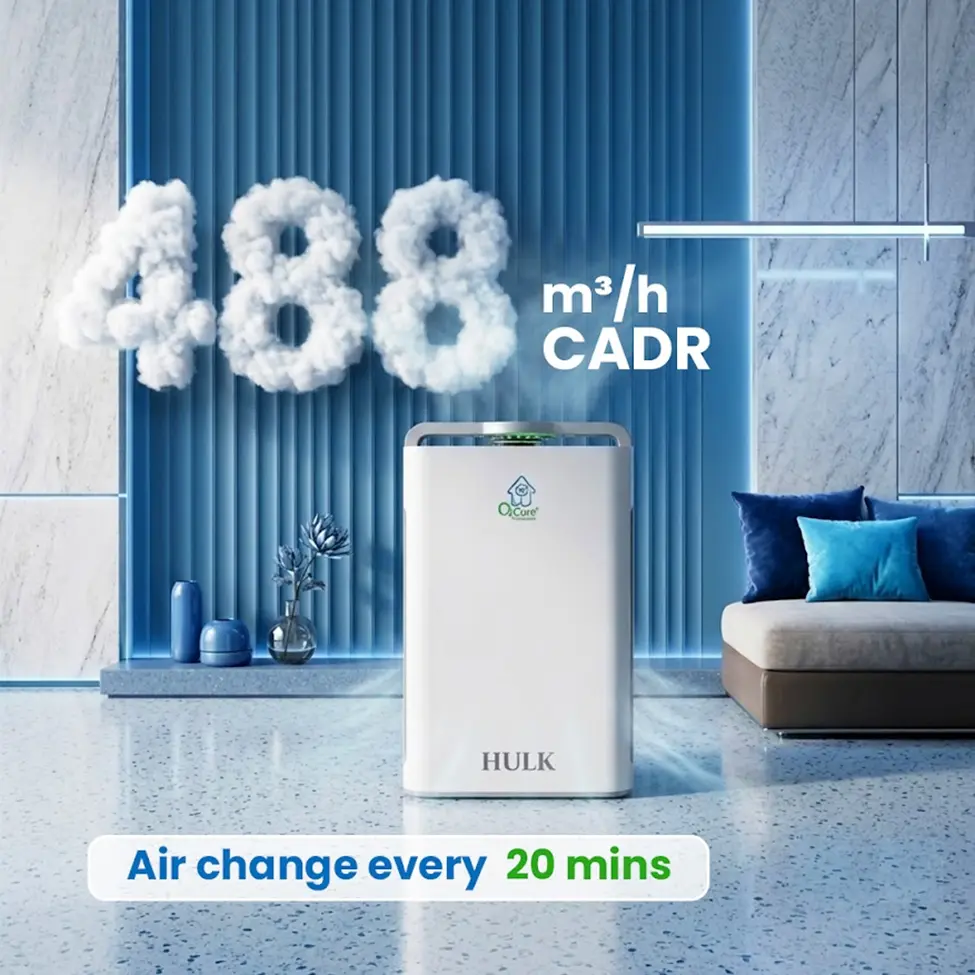
For portable units, clean air delivery rate (CADR) is one useful measure when assessing particle-cleaning capacity for a room. For central systems, filter efficiency must be considered alongside airflow and the pressure that the ventilation equipment can accommodate.
No single device removes every possible indoor pollutant. Source control and appropriate ventilation remain essential parts of a complete strategy.
Industrial Environments Need a Different Approach
Factories, workshops, warehouses and processing facilities may produce airborne contaminants that are not typically found in ordinary homes. Dust from manufacturing, fumes from certain processes and particles from material handling can create specific challenges.
An industrial air filtration system should be selected according to the process, the nature of the contaminants and the scale of the facility. A system designed for general office dust may not be appropriate for a workshop producing fine industrial particles.
A proper assessment should consider where contaminants originate and how they move through the building. In some applications, local exhaust ventilation or extraction close to the pollution source may be more effective than relying entirely on general room filtration.
Important planning considerations include:
Pollutant characteristics: Particle size, concentration, temperature and chemical properties influence the type of collection or filtration equipment required.
Airflow requirements: The system must handle the expected air volume without compromising the facility’s ventilation needs.
Workplace layout: Equipment placement, production lines, access routes and worker positions can affect system design.
Maintenance access: Filters, collection units and other components need regular inspection and servicing.
Operational safety: Certain industrial processes require specialised controls, risk assessments and compliance with applicable workplace regulations.
A correctly specified industrial air filtration system can form part of a broader workplace air-management programme. However, equipment selection should be based on a site-specific technical assessment rather than a generic product specification.
Integrating Filtration with Building Ventilation
Purification is most effective when it complements the building’s ventilation strategy. Fresh outdoor air can dilute indoor pollutants when outdoor conditions are suitable, while filtration helps remove selected contaminants from recirculated or supplied air.
In commercial buildings, central air-handling units may provide opportunities to incorporate higher-efficiency filters or additional purification equipment. However, upgrades must be compatible with the system’s fan capacity, filter housing and design airflow.
The US Environmental Protection Agency advises choosing the highest-efficiency HVAC filter that the system can accommodate, with MERV 13 or the highest compatible rating often suggested for residential systems. A qualified HVAC professional can assess whether an upgrade is suitable for a particular installation. Filter changes should also follow manufacturer guidance.
Ventilation and filtration should not be treated as competing solutions. They perform different functions and often work best together. Building operators should also address pollution sources directly, such as controlling construction dust, maintaining equipment and managing chemical storage.
Maintenance Makes a Difference
Even a well-selected purification system needs regular maintenance. Filters can become loaded with particles, reducing airflow and affecting performance. Components may also require cleaning, inspection or replacement according to the manufacturer’s instructions.
A practical maintenance plan should include scheduled filter checks, inspection of fans and ventilation pathways, sensor calibration where applicable and documentation of servicing. Facility managers should keep records of maintenance activities so recurring problems can be identified.
Monitoring results can support this process by showing whether conditions change after maintenance or equipment adjustments. However, readings should be compared under reasonably consistent conditions to avoid drawing conclusions from unrelated variations.
Building a More Informed Air-Quality Strategy
Cleaner indoor environments are not created by purchasing equipment alone. They require an understanding of pollution sources, suitable ventilation, appropriate filtration and consistent maintenance. Monitoring helps connect these elements by providing information about how conditions change and where improvements may be needed.
For organisations planning upgrades, it is sensible to begin with an assessment of the building and its occupants before selecting equipment. O₂Cure offers air purification solutions for residential, commercial and industrial environments, making it a starting point for exploring options suited to different spaces. The right solution should always be matched to the actual air-quality requirements, system capacity and operating conditions of the site.
Also Read